Carlos Delgado

Quick Answer
30–40% of admissions inquiries arrive between 7pm and 10pm, often the highest-intent leads of the day. Most teams don't respond until morning. An AI agent on WhatsApp responds in under 60 seconds, qualifies the lead, and books a call before your competitors even see the inquiry.
Most admissions teams are operating on a schedule that doesn't match when students actually reach out. The inquiry comes in at 8:47pm on a Tuesday. By 9:15am Wednesday, your competitor has already sent three messages and booked a call.
That gap is where you're losing students.
The Timing Problem Nobody Talks About
A significant share of admissions inquiries — research consistently puts it between 30% and 40% — arrive outside of standard office hours. Evenings, weekends, that quiet window between 6pm and 10pm when students have finally finished their day and are genuinely thinking about their future.
Your team isn't there. Your inbox is. But an inbox doesn't respond.
This isn't a staffing failure. It's a structural mismatch between how admissions teams work and when prospective students actually do their research.
After-Hours Inquiries Are Higher Intent — Not Lower
There's a temptation to treat after-hours leads as a secondary priority. They'll still be there in the morning.
That thinking gets it exactly backwards.
A student filling out your inquiry form at 9pm on a Thursday isn't doing it out of convenience. They're doing it on their own time, after a full day of school or work, because the question was sitting in their head and they finally made time for it. They've probably already looked at two or three programs. They're comparing. They're ready to talk.
That's not a cold lead. That's someone who's already done half the sales job for you — and they're asking you to close it.
Compare that to a student who submits a quick form at lunch because they spotted a banner ad. Same form, completely different intent. The 9pm inquiry is the one you want. And it's the one most likely to go unanswered until morning.
What Actually Happens to Those Leads Right Now
Walk through a typical Tuesday evening.
A prospective student named Maya fills out an inquiry form at 8:53pm. She's interested in your MBA program, has four years of work experience, and is trying to decide between three schools. She's on WhatsApp all day. She's not checking email.
Your team logs off at 6pm. Maya's inquiry hits an inbox. It sits there.
At 9:07am Wednesday morning, someone opens it. They write a reply, maybe with some program details. They send it at 9:32am — because there were seven other things that needed handling first.
Maya submitted a similar inquiry to another school at 9:01pm the same night. That school had an AI agent on WhatsApp. By 9:03pm, Maya had a response. By 9:15pm, she had a call booked with an admissions advisor for the next morning.
By the time your advisor hits send at 9:32am, Maya's already spoken to your competitor.
This isn't a hypothetical. It's what happens every single night across admissions teams that rely on the next-morning inbox check.
The 7pm–10pm Window Is Where It Clusters
The bulk of after-hours inquiries cluster in a specific window: 7pm to 10pm, local time for the student.
Students and working professionals have finished their primary obligations. Research behavior peaks in the early evening — browsing program pages, comparing curriculums, reading reviews. That's when the decision to reach out tips from "I'll do it later" to "I'll do it now."
This matters because it's not only high-volume — it's the window where speed of response has the greatest impact. The student is still at their laptop. A response that comes in within five minutes catches them while they're still in that research mindset. A response at 9am catches them in a meeting, on a commute, or already mentally committed to another program.
What an AI Agent Does in That Window
An AI agent running on WhatsApp doesn't have office hours.
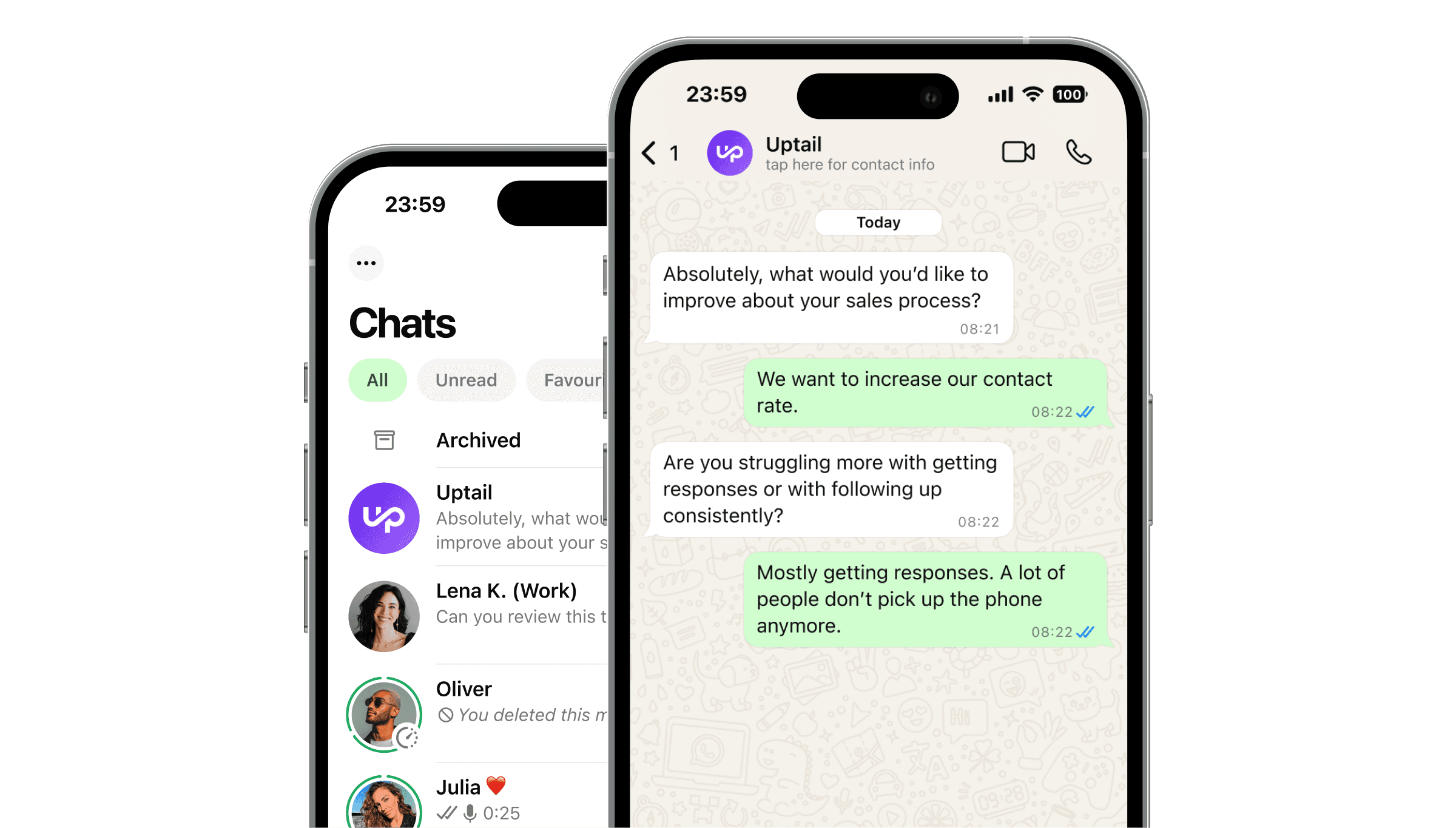
When Maya's inquiry comes in at 8:53pm, the agent responds within 60 seconds. Not with a generic autoresponder — with a real message that acknowledges her interest, asks one or two qualifying questions, and opens a conversation.
Over the next few minutes, the agent learns:
What program she's interested in
Her current background and experience level
Her timeline for starting
What her biggest questions or concerns are
Whether she wants to speak to someone
If she says yes, the agent shows her advisor availability for the next morning and books the call directly. No back and forth. No calendar link she has to find on a desktop.
By 9:05pm, Maya has a confirmed call slot for 9:30am the next day. She's been asked about her concerns. She knows someone will call her in the morning.
What Your Advisor Sees at 9am
When your admissions advisor opens their dashboard at 9am, they don't see a cold form submission from Maya. They see:
Maya's name, phone number, and WhatsApp history
The program she's interested in
Her background and current role
Her concerns about schedule flexibility
A confirmed call booked for 9:30am
A summary of the conversation so the advisor can pick up mid-stream
The advisor knows exactly who they're calling, what matters to that person, and what objections might come up. They're not starting from zero. They're starting from "Hi Maya, thanks for chatting last night — I saw you had some questions about the schedule flexibility."
One of those calls books a campus visit. The other one gets "let me think about it."
Weekend Leads Are the Same Problem — Multiplied
Evenings create a 12-to-15-hour response gap. Weekends create a 48-hour one.
A student who reaches out Friday at 7pm won't hear back until Monday morning in most admissions setups. That's two full days where they're continuing their research and potentially getting locked into a competitor's follow-up sequence.
Weekend inquiries tend to be slightly higher intent than weekday ones — students and working professionals are often doing serious program research on Saturdays, not squeezing it in between meetings.
An AI agent doesn't care what day it is. Saturday at 7pm gets the same 60-second response as Tuesday at 7pm. The advisor starts Monday morning with a full slate of warm, scheduled conversations instead of a backlog of cold form submissions.
The Revenue Math You Should Do Right Now
Take your monthly inquiry volume. Calculate what 30% of that looks like — because that's roughly what's coming in after hours.
If you're getting 500 inquiries a month, that's 150 coming in after 7pm.
If your team is converting after-hours inquiries at even half the rate of same-hour inquiries — and the gap is likely larger than that — you're leaving a substantial slice of your pipeline on the table every single month. That compounds. Over a year, across two or three cohorts, it shows up in enrollment numbers.
The fix isn't hiring someone to work the night shift. The fix is a system that works the night shift for you.
How to Make It Feel Like a Real Conversation, Not a Bot
The first message sets the tone
A message that's specific to the program they inquired about, uses a conversational tone, and asks a genuine question feels like a person reached out.
Keep the scope narrow
The agent's job in that evening window isn't to answer every possible question. It's to qualify the lead, build enough rapport that the student wants to take the next step, and book the call.
Be transparent when it matters
If a student directly asks whether they're talking to a person, the agent should say it's an AI assistant. Students are increasingly comfortable with AI on messaging apps.
Hand off cleanly
The worst version of this process is a student who had a great AI conversation and then speaks to an advisor who has no idea what was discussed. The handoff context is what makes the AI conversation worth having.
The Window Is Open Every Night
Your best prospective students are researching programs tonight. Some of them will reach out between 7pm and 10pm. Some will do it on Saturday afternoon.
You can build a process that's ready for them, or you can keep competing in the 9am inbox.
The admissions teams seeing the strongest pipeline conversion right now aren't the ones with the biggest budgets or the most staff. They're the ones who figured out that availability compounds. Every inquiry that gets a real response in under 60 seconds is an inquiry that's still alive by morning.