Carlos Delgado
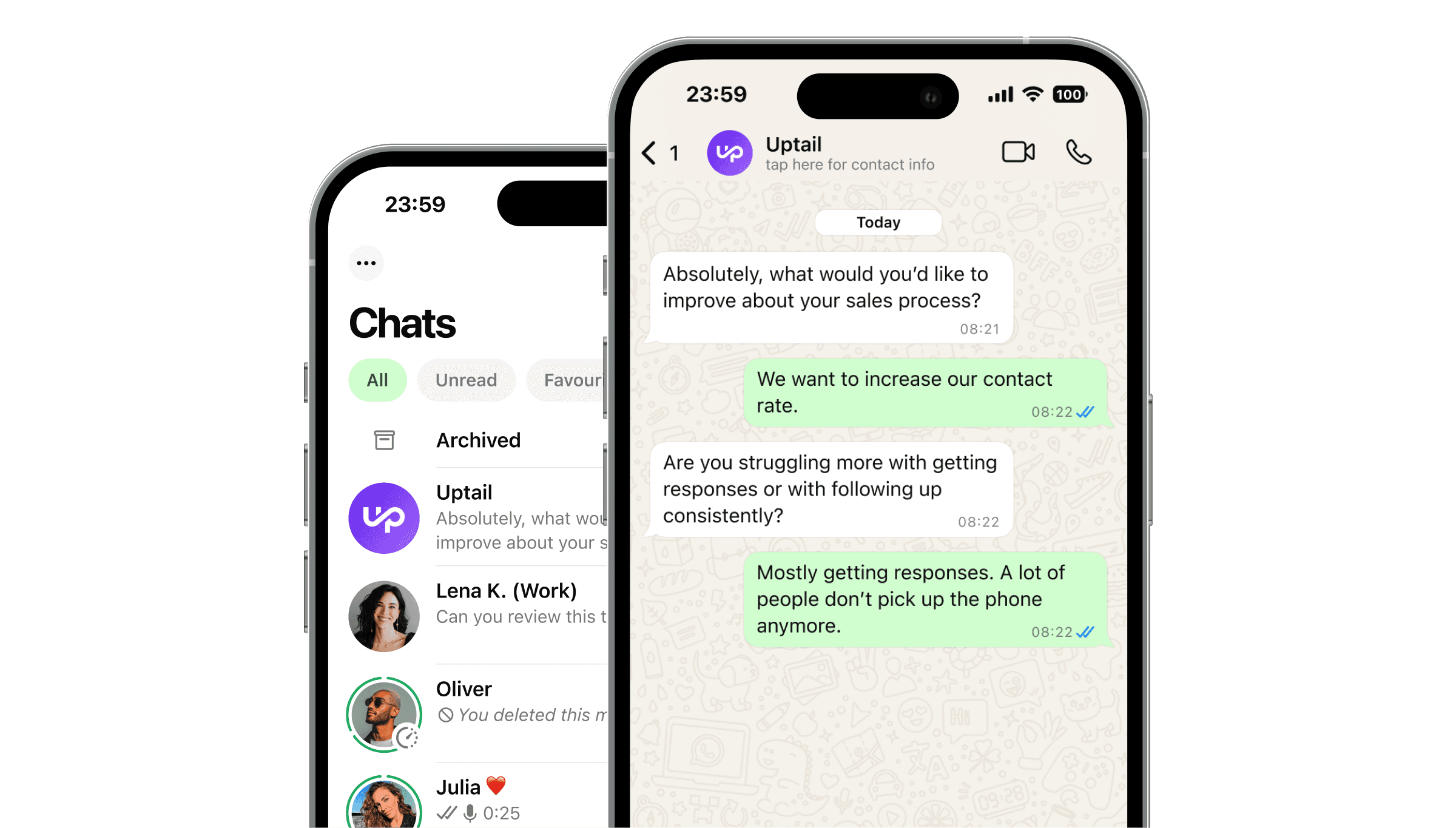
Most companies send a welcome message when a new contact comes in and then wait. But a single message is rarely enough to move a prospect or customer toward the action you want.
Automated WhatsApp message sequences solve exactly this problem: they keep the conversation active systematically, at the right time, and without your team having to do it manually for each contact.
Quick answer
An automated WhatsApp message sequence is a series of scheduled messages that are sent to a contact automatically based on their actions, responses, or a predefined timeline. They are set up once through the WhatsApp Business API and triggered by specific events: a new signup, a purchase, an upcoming appointment, or inactivity over a period of time. The most effective sequences in 2026 combine personalization with dynamic variables, conditional logic based on user responses, and smart handoff to human agents when the contact is ready to move forward.
Why Sequences Are More Effective Than One-Off Messages
A one-time message captures attention in the moment. A well-designed sequence builds trust over time, educates the prospect, anticipates objections, and guides each contact toward a specific action. It is the difference between a salesperson who calls once and disappears, and one who follows up consistently with the right context at every step.
In addition, sequences make it possible to scale communications without increasing team workload proportionally. Once set up, they work continuously for hundreds or thousands of contacts at the same time.
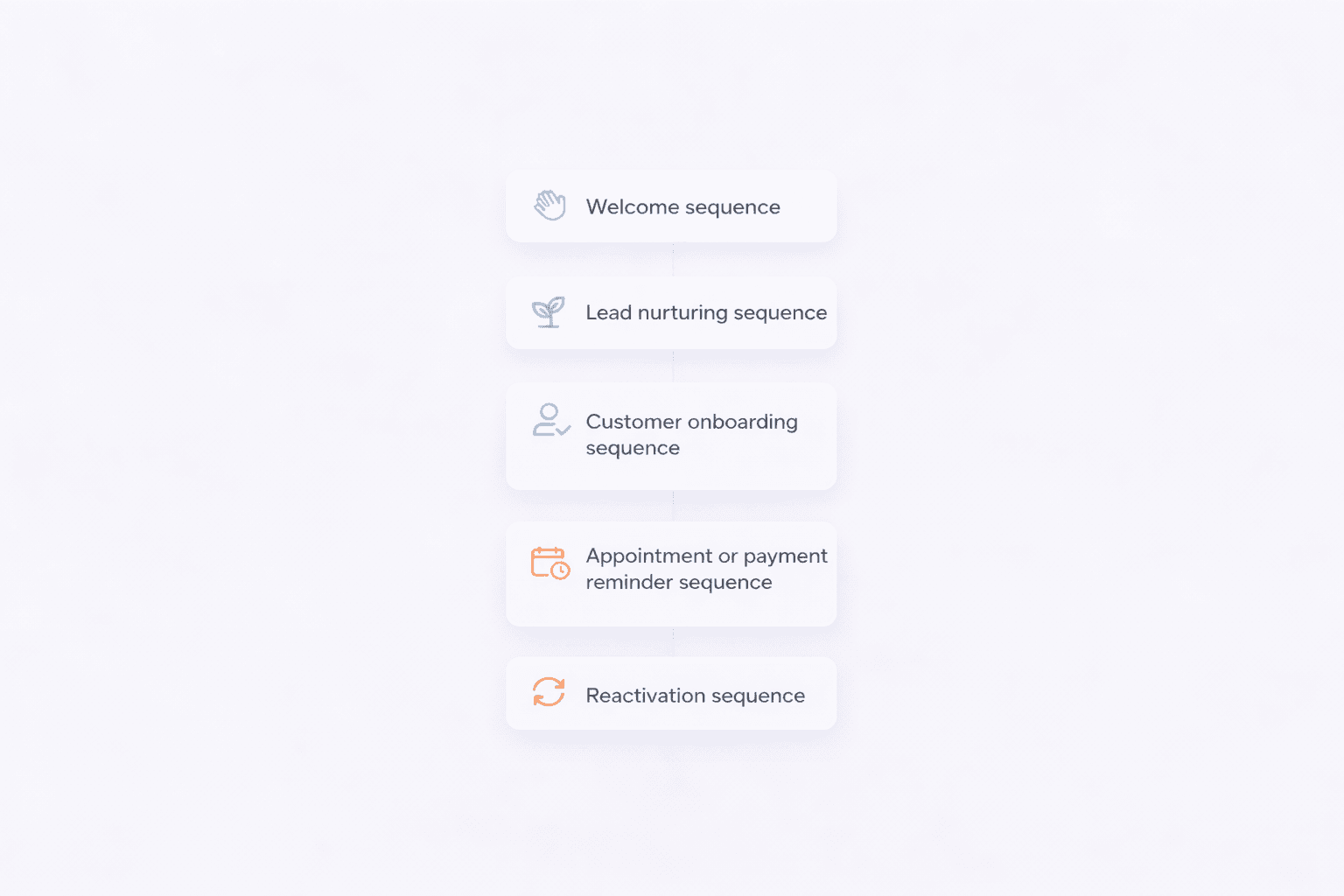
The 5 Types of WhatsApp Sequences That Convert Best
1. Welcome sequence
This is triggered when a new contact reaches your WhatsApp for the first time. Its goal is to introduce the brand, build trust, and deliver an initial piece of value before asking for anything. A common mistake is using the welcome sequence to sell immediately; the result is often losing the contact.
Typical structure:
Message 1 (immediate): Personalized welcome with the contact’s name and a brief introduction to how you can help.
Message 2 (24 hours later): Valuable resource: follow up, guide, case study, explainer video, or free tool.
Message 3 (48–72 hours later): Follow up: Follow up with a qualification question or a clear invitation to take the next step, such as booking a demo, scheduling a call, or making a reservation.
2. Lead nurturing sequence
For prospects who have shown interest but are not yet ready to buy. It runs over days or weeks with educational content, testimonials, and differentiating arguments. The key is to provide value in every message before presenting a commercial offer.
Typical structure:
Message 1: Educational content about the problem you solve.
Message 2: Success story from a client in a similar situation.
Message 3: A differentiator compared with market alternatives.
Message 4: Offer or direct call to action.
3. Customer onboarding sequence
For new customers who have just purchased your product or service. The goal is to reduce friction in the first steps, increase activation rate, and prevent early churn. The first 14 days are critical for long-term retention.
4. Appointment or payment reminder sequence
This automates reminders to reduce missed meetings and late payments. Companies that implement automated WhatsApp reminders report reductions of up to 50% in no-show rates.
5. Reactivation sequence
For contacts who have gone weeks or months without replying. It starts with a message that reminds them of the previous relationship context, continues with an updated value proposition, and closes with a final message. If there is still no response after the sequence, the lead is marked as inactive in the CRM.
How to Design a Sequence That Works
Define one single goal per sequence
Before writing the first message, determine what you want the contact to do at the end of the flow. Book a call? Complete a payment? Activate their account? Every content and timing decision should serve that goal.
Personalize with dynamic variables
Including the contact’s name, company name, or the product they asked about significantly increases response rates. Modern automation tools make it easy to insert these variables.
Respect sending times
Messages sent outside working hours or late at night create friction and may feel intrusive. Configure sequences so they only send during appropriate time windows, generally between 9:00 a.m. and 8:00 p.m.
Always include an exit option
To comply with GDPR and WhatsApp policies, users must be able to opt out at any time. Include clear unsubscribe instructions at some point in the flow.
Technical Requirements to Implement Sequences
Capability | WhatsApp Business App | WhatsApp Business API |
|---|---|---|
Automatic welcome message | ✅ Yes | ✅ Yes |
Multi-message sequences | ❌ No | ✅ Yes |
Conditional logic based on replies | ❌ No | ✅ Yes |
Personalization with variables | ❌ No | ✅ Yes |
Mass sending with approved templates | ❌ No | ✅ Yes |
CRM integration | ❌ Limited | ✅ Full |
For any sequence with more than one message and real automation logic, the WhatsApp Business API connected to a specialized platform is essential.
Frequently Asked Questions
How many messages should a WhatsApp sequence have?
Between 3 and 5 messages is the optimal range for most use cases. Longer sequences can feel intrusive if they are not very well segmented. The exception is onboarding and extended nurturing flows, where 7 to 10 messages spread over several weeks can be appropriate.
How often should messages in a sequence be sent?
It depends on the sequence type. For welcome sequences, the first three messages within the first 3 days perform well. For nurturing, spacing messages 3 to 7 days apart avoids saturation. For appointment reminders, 24 hours before and 2 hours before are the most effective times.
Can WhatsApp sequences be triggered by user behavior?
Yes, with the API and the right automation platform. Sequences can be triggered based on whether the user replied, which option they selected in a menu, which product they viewed in your e-commerce store, or whether they completed a purchase.
What happens if the contact replies during a sequence?
It depends on how the flow is configured. Well-designed sequences detect the user’s reply, pause the next scheduled message, and adapt the content based on what they said. If the reply signals purchase intent, the contact can be handed off automatically to a human agent.
Do automated sequences reduce personalization?
On the contrary. A well-configured sequence with dynamic variables and conditional logic can be more personalized than manual communication, because it takes into account the contact’s history, previous replies, and stage in the funnel.