Carlos Delgado
Quick Answer
Automating student enquiry follow-up on WhatsApp means every prospective student gets a personalised, timely response regardless of when they enquire, without manual work from your admissions team. This guide covers the follow-up architecture, message sequences, timing, and tools that education providers are using in 2026.
The Follow-Up Problem in Admissions
Most admissions teams follow up well when volume is low and timing is good. The problem is that neither of those conditions holds consistently.
Enquiries arrive at 11pm on Sundays. They spike after open days when the team is exhausted. They pile up over Christmas and bank holidays. And the students who enquire at inconvenient times are just as likely to enrol, they're just less likely to be followed up with.
Manual follow-up at scale is structurally impossible. Automation solves it.
What Automated Follow-Up Looks Like in Practice
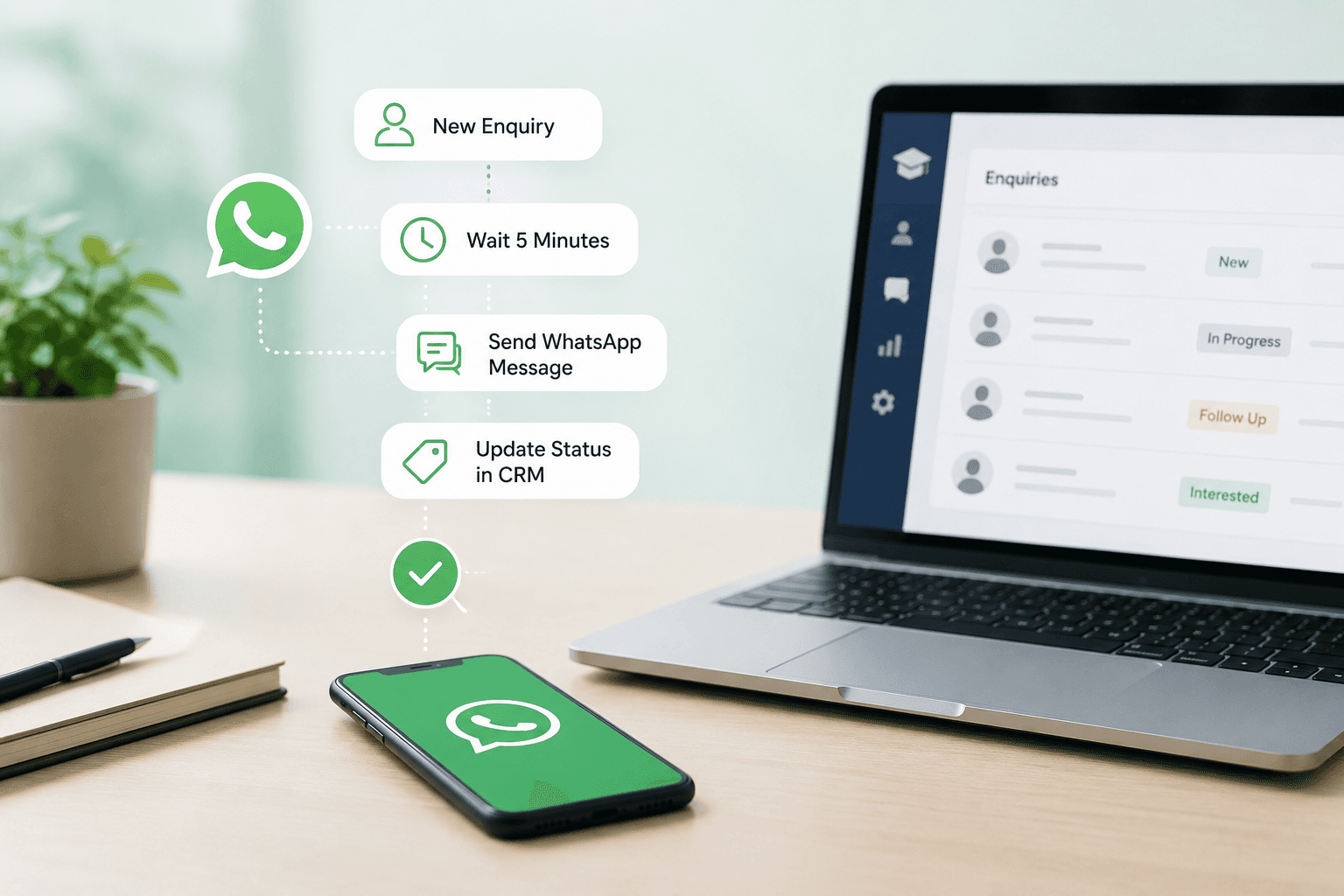
A well-designed WhatsApp follow-up system has four stages:
Stage 1: Instant first response
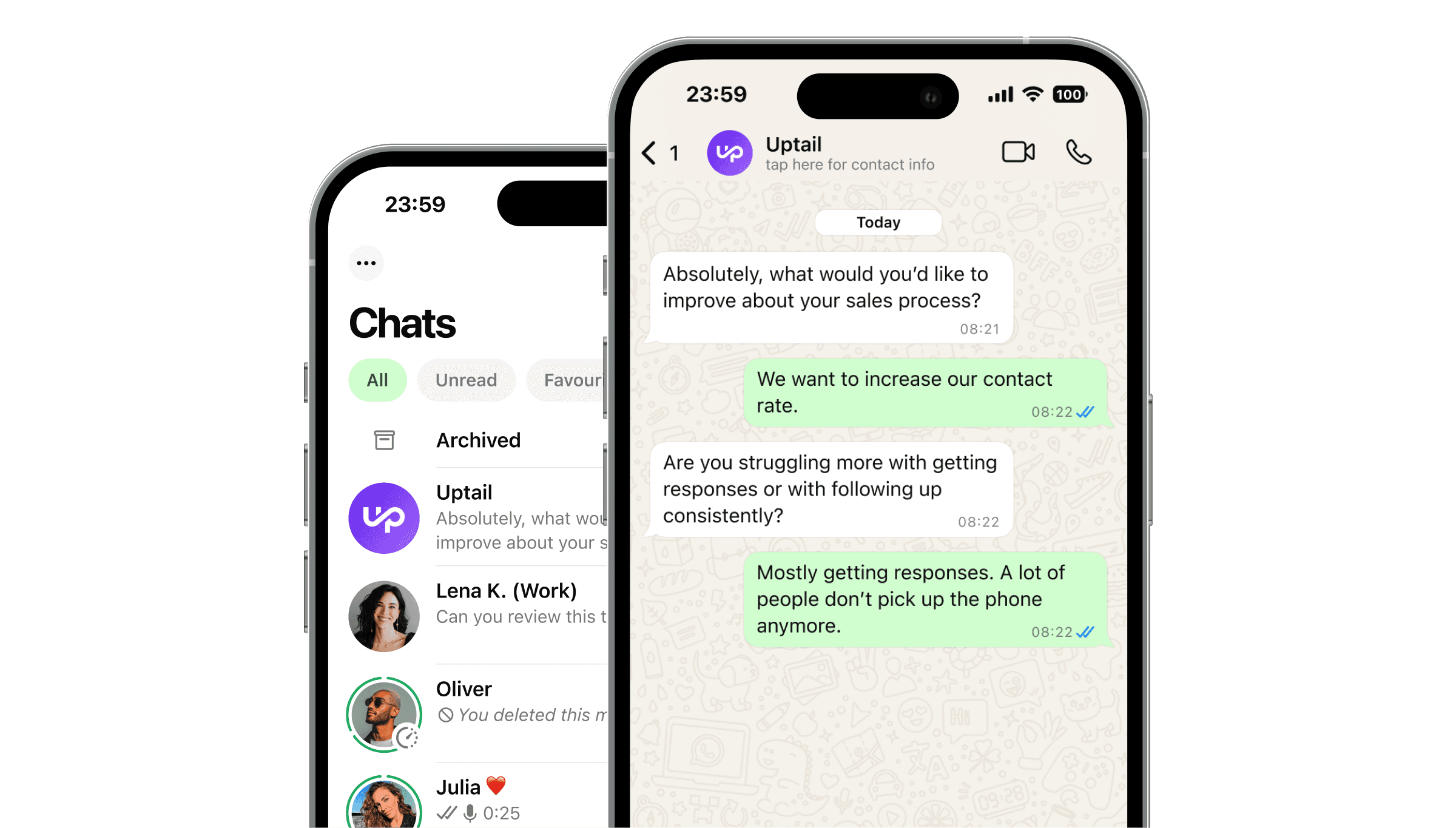
The moment a student submits an enquiry, through your website, a click-to-WhatsApp ad, or a QR code at an event, the AI agent sends a personalised opener. Not a generic auto-reply. A message that references what the student asked about and opens a real conversation.
"Hi [Name] — thanks for reaching out about [Programme]. Quick question: are you looking at the January or September intake? I'll send you the right info based on your timeline."
Stage 2: Qualification sequence
While the student is still engaged, the agent works through the qualification questions: programme interest, start date, academic background, funding situation. This takes 3–5 exchanges and happens naturally within the conversation. By the end, the student is qualified and the data is in your CRM.
Stage 3: Consultation booking
Once qualified, the agent offers a consultation slot. It presents available times, confirms the booking, and sends a calendar reminder. No human involved until the call itself.
Stage 4: Follow-up sequences
For students who don't book immediately, or who book but don't show, the system runs structured follow-up sequences:
Day 1: Check-in if no response
Day 3: Value-add message (relevant graduate story, programme highlight)
Day 7: Application deadline reminder
Day 14: Scholarship or financial aid nudge
Day 21: Final close with low-friction CTA
After 21 days with no engagement, the student is archived and triggered for re-engagement at the next intake cycle.
Timing Is Everything
The follow-up timing rules that consistently perform best in education:
First response: under 60 seconds
Research shows leads are up to 21x more likely to convert when contacted within 5 minutes versus 30 minutes. Under 60 seconds is achievable only with automation, no human team can do this consistently.
Follow-up cadence: not too aggressive
Messages every 24 hours feel like harassment. The 0/3/7/14/21 cadence is consistent without being overwhelming, and keeps unsubscribe rates below 3%.
Time of day: match the student's behaviour
Students researching courses browse in the evening and on weekends. Your automated system should be active then, which is exactly when your human team isn't.
What You Need to Set This Up
WhatsApp Business API access
The standard WhatsApp Business app doesn't support automation at this level. You need API access, either directly or through a platform like Uptail that manages it for you.
A qualification script
Define the 1–2 questions that surface student fit and readiness. Keep them conversational, they should feel like a chat, not a form.
Calendar integration
The booking step requires access to your advisors' calendars. Most platforms integrate with Google Calendar, Outlook, or Calendly.
CRM integration
Qualification data needs to land in your CRM automatically, tagged to the right student record.
Message templates approved by Meta
Any proactive messages (sent more than 24 hours after the last student message) need to use pre-approved templates. Your platform provider manages this process.
Common Mistakes to Avoid
Sending generic openers:
"Hi, thanks for your enquiry. A member of our team will be in touch." This is not automation, it's a delay. The first message needs to be personalised and start a conversation.
Over-automating:
Students with complex situations — visa queries, disability support needs, recognition of prior learning — should be escalated to a human quickly. Build clear escalation triggers into your system.
No human handoff protocol:
Automation handles the first stage. Advisors handle the close. Define exactly when the handoff happens, how it's signalled, and how the advisor gets the conversation context.
Ignoring opt-outs:
WhatsApp's messaging policies require immediate opt-out processing. High opt-out rates (above 3%) can restrict your account. Monitor this metric and adjust messaging if it rises.