Carlos Delgado
University admissions funnels have always leaked at predictable points, the first response, the campus visit, the gap between visit and application, and the yield stage between admission and enrolment. What's changed is how fast each of those moments now has to move.
Prospective students are talking to several institutions at the same time, expect a response in minutes, and increasingly run the conversation on WhatsApp. Teams that match that expectation convert meaningfully more students. Teams that send a generic email and wait don't.
This guide walks through what good looks like at each stage of the admissions funnel and how AI agents on WhatsApp are changing what's operationally possible.
Quick Answer
A healthy university admissions funnel in 2026 is built on speed, brevity, and continuity of conversation. Teams hitting their numbers respond to inquiries within minutes, qualify with two questions instead of five, send a three-message reminder sequence before campus visits, and stay in light, conversational contact through the yield stage. Most of this is now run on WhatsApp with an AI agent handling the first response around the clock and a human admissions counsellor handling the high-stakes moments.
What Is the Modern Admissions Funnel?
The traditional admissions funnel has four stages: inquiry, application, admission, enrolment. Every institution shapes those stages slightly differently, but the leaks tend to be predictable. Most prospective students drop out of the funnel between the first inquiry and the campus visit, between the visit and the application, or between an offer of admission and the final enrolment decision.
The math hasn't changed dramatically in years. The way prospective students move through it has.
Why the Admissions Funnel Leaks in 2026
The biggest shift since 2020 is that prospective students are no longer captive. They submit inquiries to several institutions at once, they expect almost-immediate replies, and they make their shortlist based partly on which schools talked to them quickly and well in the first conversation.
That changes what the funnel is actually testing. It used to test how compelling your programmes and brochures were. Now it tests how well your institution holds a conversation. The information advantage has flattened, every school has a polished website, a virtual tour, and a downloadable prospectus. The conversation advantage is wide open.
Teams that respond fast, ask the right two questions, and stay in light, helpful contact convert more students. Teams that send a generic email and wait don't.
How to Convert More Inquiries at Each Stage
The same principles apply across the funnel: speed, brevity, and continuity of conversation. What changes is the specific cadence at each stage.
Stage 1: Responding to a New Inquiry
The first response should happen as quickly as possible, minutes, not hours. Most inquiries arrive outside business hours, which means an admissions officer can't realistically be the first responder for everyone. An AI agent on the channel the student already uses, WhatsApp in most regions, closes that gap.
The first response should do three things and only three things:
Confirm the institution received the inquiry
Ask two qualifying questions, not five
Offer the obvious next step, a campus visit, info session, or call with an admissions counsellor
The two-question rule. A bad WhatsApp playbook looks like this: "What programme are you interested in? Undergrad or grad? Have you applied before? What's your intended start date? Are you applying for financial aid?"
That's five questions, three of which can wait. A good playbook is two: "Are you looking at undergrad or grad, roughly?" + "When are you hoping to start?"
The first cuts the programme conversation cleanly in half. The second filters the applicants from the browsers. Financial aid, prior applications, and exact programme choice are conversations that happen on the campus visit or the discovery call.
Stage 2: Booking and Showing Up to the Campus Visit
The campus visit is the single highest-leverage moment in the funnel. A student who visits is far more likely to apply, and a student who applies after visiting is far more likely to enrol. No-shows are expensive, they don't just cost the visit, they cost the downstream conversion path.
A campus tour booked on a Wednesday for a Saturday has a four-day gap during which the family is doing comparison shopping. The most common pattern is the soft no-show: the student didn't change their mind about your school, they decided Friday night to visit another school first, or got busy, or forgot.
A working reminder sequence:
Booking moment: confirmation with date, time, parking, and the name of the admissions counsellor they'll meet
A couple of days before: a friendly reminder with a one-tap reschedule option
A few hours before: a short "see you soon" note with directions
Shortly after, if no-show: "Sorry we missed you, want to rebook for next weekend?"
That last message is the one most teams skip. It's also the one that recovers the most pipeline.
Stage 3: Post-Visit to Application
After a visit, students enter a quiet period. They're comparing notes, talking to parents, looking at financial aid, and, most importantly, talking to several other institutions doing exactly the same thing. The teams that win this stage stay present without being pushy.
A useful post-visit cadence is light and content-driven, not sales-driven:
Same day: a thank-you specific to what the student saw, not a template
A couple of days later: an answer to a question they asked during the visit, with a relevant link
A week later: a soft check-in, "Any questions come up after the visit?"
Closer to the deadline: a reminder only if relevant
The mistake most teams make is sending several application-deadline emails in a row. The student already knows the deadline. What they don't know is whether your institution still cares about them specifically.
Stage 4: Admitted to Enrolled
Yield is where the funnel math gets brutal. An admitted student talking to two other institutions that also admitted them will pick one of three. Generic congratulations emails won't move the needle.
What does move the needle is a personal message from the admissions counsellor they already know, not a department-wide email. A clear next-step path through deposit, housing, and orientation, all in a single conversation thread the student can return to.
And a way to ask quick questions without scheduling a call. WhatsApp wins this for the same reason it wins earlier in the funnel: it's where the student already lives.
Yield-stage no-shows look different from visit-stage no-shows. They're slower, quieter, and often the student doesn't tell you they've decided against your school — they just stop replying.
A two-touch recovery sequence — "We noticed you haven't completed your deposit — anything we can help with?" followed by a final "We'd love to keep your spot — let us know either way" — recovers more admitted students than most teams expect.
Key Benefits of Running the Funnel on a WhatsApp AI Agent
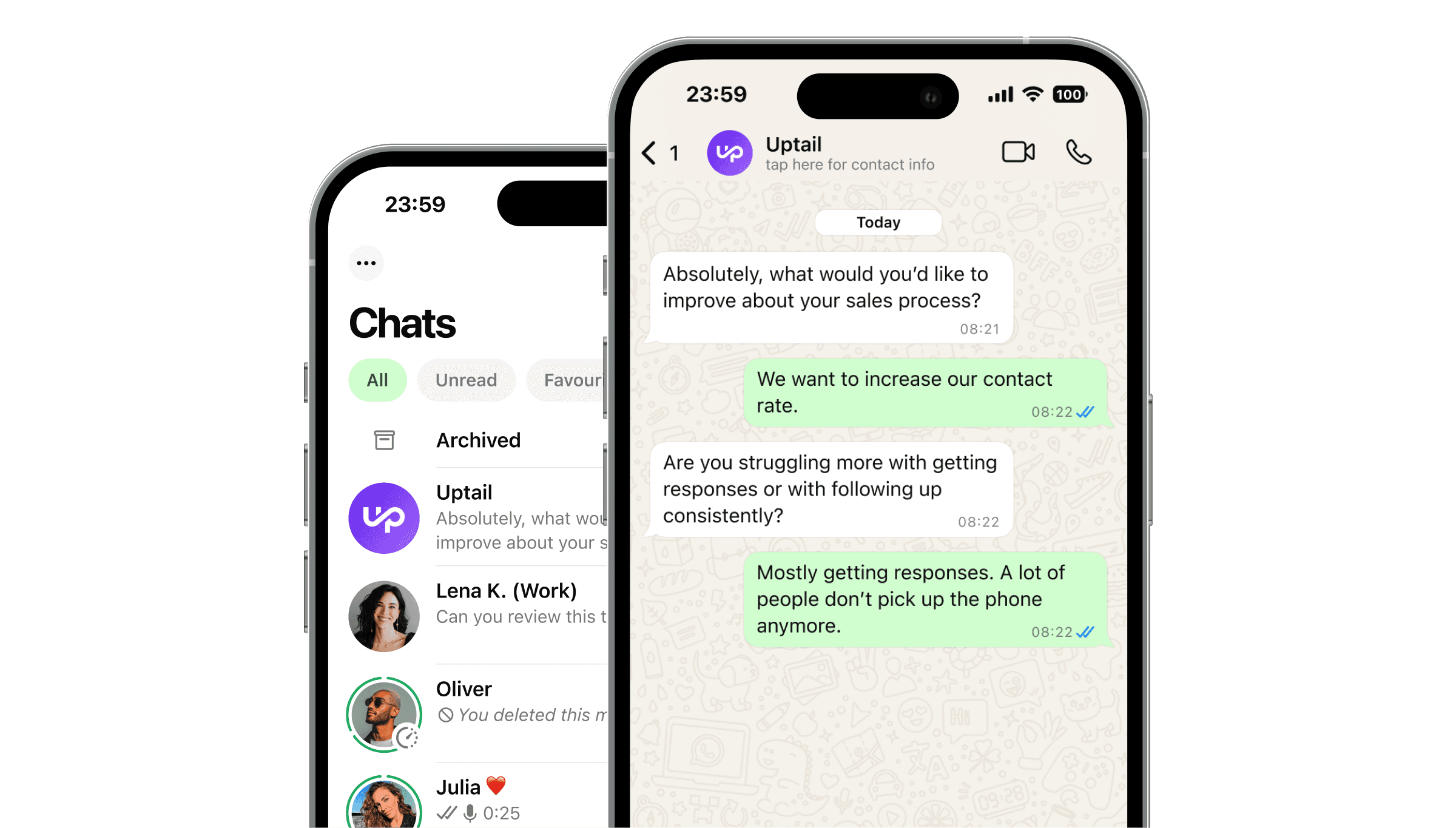
Most admissions teams can't realistically run all of the above manually. The volume is too high, the response-time bar is too tight, and the channel mix is too fragmented. This is where AI agents on WhatsApp have changed what's operationally possible.
Always-on speed-to-lead
A purpose-built AI agent replies in seconds, including evenings and weekends. When the institution that admits first tends to win the student, that response speed becomes a structural advantage rather than an operational nice-to-have.
Two-question qualifying, in the student's voice
The agent asks the two highest-signal questions and moves the student toward the obvious next step, instead of routing them through a long form they're likely to abandon.
Automated reminder and recovery sequences
Campus visit confirmations, day-before reminders, two-hour nudges, and post-visit recovery messages run automatically across thousands of bookings, without an admissions counsellor having to remember to send them.
Full conversation context on human handoff
When a student asks something the AI shouldn't answer alone — financial aid specifics, a request to talk to faculty, an admitted student weighing options — the conversation hands off to a human admissions counsellor with the full thread attached. The student never has to repeat themselves.
Native CRM integration
Every conversation produces structured data: programme interest, intended start, qualification status, every question asked. That syncs directly to Salesforce, Slate, HubSpot, or whatever system the admissions office already uses.
Frequently Asked Questions
Where do university admissions funnels leak most often?
At four predictable points: the first response to an inquiry, the campus visit booking, the gap between visit and application, and the yield stage between admission and enrolment. Each leak has a different cause and a different fix, but all of them are downstream of the same root problem: prospective students don't wait the way they used to.
How fast should admissions teams respond to a new inquiry?
As fast as possible, minutes, not hours. The institution that responds first sets the tone for the entire relationship, and prospective students increasingly make their shortlist based on which schools talked to them quickly. AI agents on WhatsApp make near-instant first responses possible around the clock.
Should universities use WhatsApp for admissions?
In most regions outside North America, yes — WhatsApp is the default messaging channel for prospective students and their families. In the US, adoption is growing fastest among international applicants and Spanish-speaking domestic applicants. Open and reply rates significantly outperform email at every funnel stage.
What's the difference between an AI WhatsApp agent and a chatbot?
A chatbot follows scripted decision trees and breaks when a student asks something off-script. A WhatsApp AI agent understands natural language, maintains context across the full conversation, and hands off to a human admissions counsellor with full context when the situation calls for it. The difference shows up in both reply rates and admissions counsellor satisfaction.
What CRMs integrate with WhatsApp AI agents for admissions?
Most platforms support native integration with Salesforce, Slate, HubSpot, Zoho, and Microsoft Dynamics. Conversation data syncs directly into existing records without manual entry.