Carlos Delgado
We A/B tested over 1,000 WhatsApp conversations to answer one simple question: do emojis help or hurt your reply rate? The answer surprised everyone.
A customer came to us with a question that sounds trivial but has massive implications for lead conversion: "Should we use emojis in our opening WhatsApp message?"
This is the message that fires the moment a lead comes in through paid ads. It's the first impression. The thing that determines whether a conversation starts at all, or dies on read.
Our answer was simple: let the data decide.
The Experiment
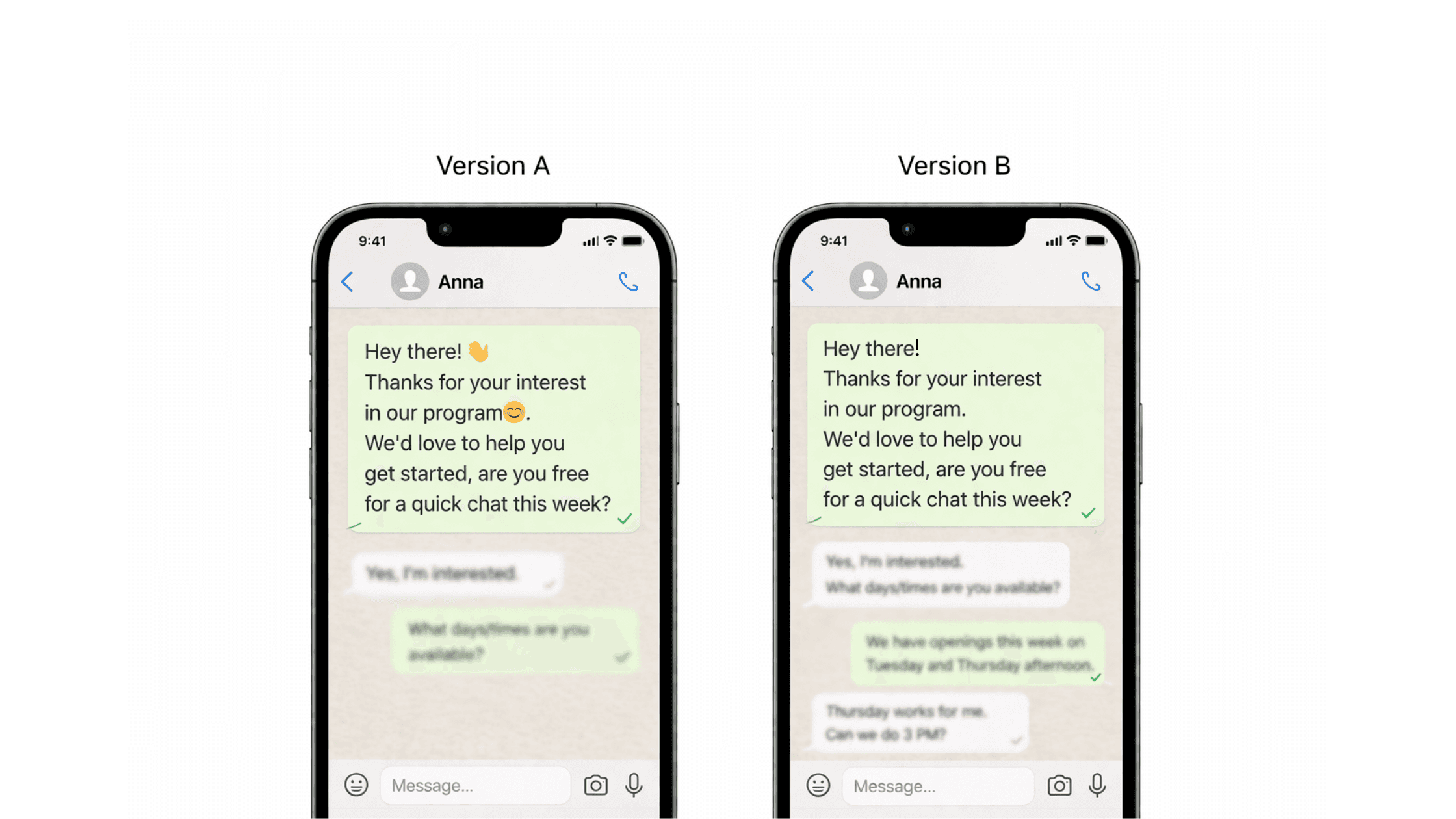
We created two versions of the same opening message. Identical copy, identical intent. The only difference: one included emojis, the other didn't.
Version A: With Emojis
Hey there!👋🏼 Thanks for your interest in our program😊. We'd love to help you get started, are you free for a quick chat this week?
Version B :Without Emojis
Hey there. Thanks for your interest in our program. We'd love to help you get started, are you free for a quick chat this week?
We ran both versions across 1,000+ real conversations generated from paid ad leads. Same audience, time windows and, offer. The only variable was the presence of emojis.
The Results
Without Emojis: 56% WhatsApp reply rate
With Emojis: 46% WhatsApp reply rate
A 10 percentage point lift in reply rate from a single change (n = 1,000+ conversations).
Why Does This Happen?
Think about your own WhatsApp inbox. When you see a message full of emojis from an unknown number, what's your first instinct? You think: "This is marketing."
Emojis are a visual cue that the message was written for scale, not for you. They signal broadcast. They signal automation, and on a platform as personal as WhatsApp, that's a death sentence for engagement.
WhatsApp is personal. The closer your first message feels to how a real person texts, the more likely you are to get a reply.
When the message reads like something a human would actually type , no wave hands, no sparkles, no pointing fingers, the lead processes it differently. It feels like someone is actually talking to them, not just firing off a template. That perception shift is worth 10 points of reply rate.
What This Means For Your Outreach
Key Takeaways
Channel context matters more than "best practices.": What works in email or social ads doesn't automatically work on WhatsApp. Every platform has its own psychology.
Your first message is a trust signal: Leads are deciding whether you're a person worth responding to, or a bot worth ignoring. Every element, including emojis, shapes that judgment.
Small changes compound: A 10-point lift in reply rate means 10% more conversations per month, more qualified leads entering your pipeline, and more revenue from the same ad spend.
Always test your assumptions: The customer assumed emojis would make the message friendlier. The data showed the opposite. Never guess when you can measure.
This is one of dozens of micro-optimizations we run for customers every month. Individually, they seem minor. Together, they're the difference between a WhatsApp channel that leaks leads and one that consistently converts. The details matter so test everything.