Carlos Delgado
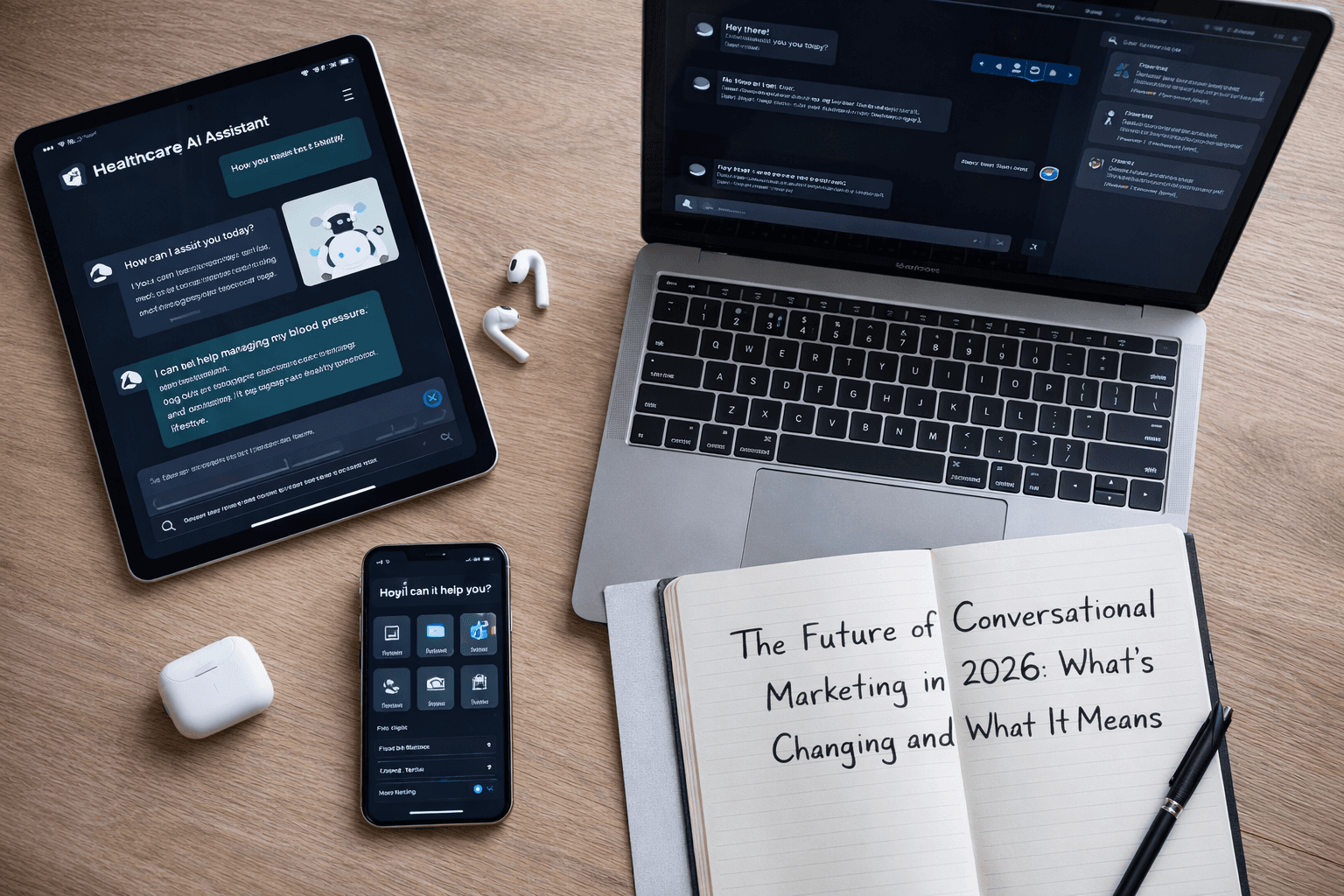
The Future of Conversational Marketing: 5 Shifts Reshaping How B2C Companies Sell in 2026
Conversational marketing isn't new, businesses have been using live chat and chatbots for years. What's new is the speed at which messaging channels, AI capabilities, and buyer expectations are converging.
In 2026, the companies winning on this front aren't just automating replies. They're running entire sales and support workflows inside the same chat thread where the customer first said hello. This is where the channel is heading and what your team should be building toward now.
Quick Answer
The future of conversational marketing in 2026 centres on five shifts: AI-powered conversations that handle complex queries beyond simple FAQ bots, WhatsApp and messaging-first commerce where the entire purchase happens in-chat, zero-party data collection through conversations instead of forms, unified messaging across channels (WhatsApp, Instagram, SMS, web chat) from a single platform, and real-time personalisation driven by CRM data and conversation history. The WhatsApp Business API is at the centre of this shift for markets outside North America.
5 Conversational Marketing Trends Reshaping 2026
Trend | What's Happening | Why It Matters |
|---|---|---|
AI Beyond FAQ Bots | LLMs handle nuanced queries, product recommendations, and objection handling | Automation covers more of the funnel, fewer handoffs to humans required |
In-Chat Commerce | Browsing, selection, and confirmation happen entirely inside WhatsApp | Removes every redirect and form between interest and purchase |
Zero-Party Data via Chat | Conversational flows replace static forms for lead capture and preference gathering | Higher completion rates and richer data, collected with explicit consent |
Omnichannel Messaging | WhatsApp, Instagram DMs, SMS, and web chat managed from one inbox and flow builder | Consistent experience for the customer, single dashboard for the team |
Real-Time Personalisation | CRM data, past purchases, and conversation history shape every message dynamically | Messages feel relevant instead of generic, driving higher engagement and conversion |
How AI Is Changing Conversational Marketing
The first generation of chatbots followed rigid decision trees. If a customer asked something off-script, the bot broke. In 2026, AI-powered conversational agents can understand intent, handle follow-up questions, and manage multi-turn interactions that feel natural.
The shift isn't about eliminating human reps, it's about letting AI handle the 80% of conversations that follow predictable patterns, so reps focus on the 20% that require judgment, empathy, or negotiation.
The practical impact: teams can scale WhatsApp conversations without scaling headcount. A business handling 500 inbound chats per day doesn't need 50 agents, it needs a well-built AI flow that routes the complex cases to 10.
WhatsApp as a Commerce Channel: What Businesses Need to Know
Meta has been steadily building commerce infrastructure into WhatsApp: product catalogues, in-app payments (live in India and Brazil, expanding to more markets), and shopping cart functionality.
The trajectory is clear: WhatsApp is evolving from a messaging app to a transaction platform. For businesses, this means the entire customer journey (discovery, consideration, purchase, and post-sale support) can happen inside one WhatsApp thread.
Product & Service Browsing
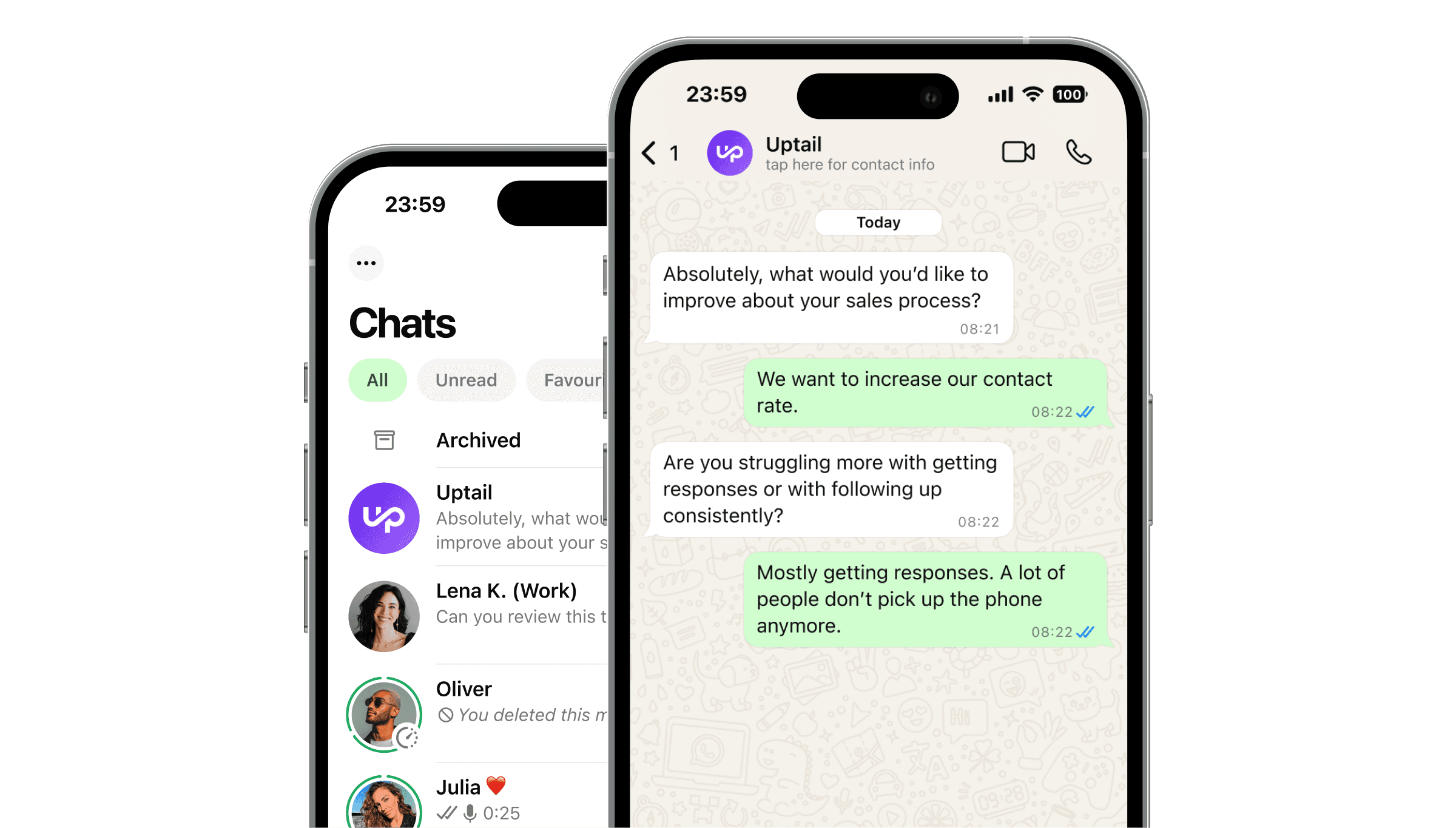
Customers browse products or services directly inside WhatsApp without visiting a website. An AI agent walks the customer through available options, answers questions, and captures intent, all in-chat.
Appointment Booking & Reminders
Customers book appointments directly in a WhatsApp conversation, no links to external scheduling tools, no back-and-forth emails. An AI agent handles availability, confirms the slot, and sends automated reminders as the date approaches. When the booking flow lives inside the same platform as your CRM, every appointment is tied to a contact record with full conversation history, so whoever takes the meeting already has context.
Re-Engagement Campaigns
After a purchase, drip sequences bring customers back, product recommendations, loyalty offers, review requests, all delivered in the channel they already check dozens of times a day.
Zero-Party Data Collection Through Conversational Flows
A conversational flow on WhatsApp that asks the same questions (name, company, use case, timeline) in a chat format consistently outperforms forms because the interaction feels like a conversation, not paperwork.
The data collected this way is zero-party: the customer gives it directly and voluntarily, which makes it more reliable and more compliant with privacy regulations than third-party tracking data.
As cookie deprecation continues and privacy regulations tighten, businesses that collect data through conversations rather than tracking scripts will have a structural advantage in both data quality and compliance.
How to Prepare Your Conversational Marketing Strategy
1. Build on the WhatsApp Business API
The free WhatsApp Business App can't support automation, commerce flows, or CRM integration at scale. If you're still using the app, migrate to the API now, it's the foundation for everything described in this article.
2. Invest in Conversational Design
The quality of your chat flows matters more than the technology behind them. Hire or train someone who can write natural conversation scripts, design branching logic, and optimise flows based on drop-off data.
3. Unify Your Messaging Channels
If your WhatsApp, Instagram, SMS, and web chat are managed in separate tools, consolidate. A single platform like Uptail reduces context switching for your team and provides a consistent experience for customers.
4. Connect Everything to Your CRM
Conversations without CRM sync produce orphaned data. Every message, lead score, and purchase signal should flow into your pipeline automatically so sales, marketing, and support share the same view. Platforms built with CRM and WhatsApp integration from the ground up make this seamless.
5. Start Testing AI-Assisted Flows
You don't need to replace your entire chatbot overnight. Start with one use case, product recommendations, FAQ handling, or lead qualification, and measure whether AI improves resolution time and customer satisfaction.
Conversational Marketing FAQ
What is conversational marketing?
Conversational marketing uses real-time messaging channels like WhatsApp, Instagram DMs, SMS, and web chat to engage leads and customers through two-way conversations instead of one-way broadcasts or static forms.
How is AI changing conversational marketing in 2026?
AI-powered agents now handle nuanced, multi-turn conversations, not just scripted FAQ responses. Businesses can automate routine interactions (product recommendations, lead qualification, objection handling) and only route complex cases to human reps.
What’s the difference between the WhatsApp Business App and the WhatsApp Business API?
The free app is designed for small businesses managing conversations manually. The API supports automation, CRM integration, commerce flows, and high-volume messaging, it’s the infrastructure required to run conversational marketing at scale.
What is zero-party data and why does it matter for marketing?
Zero-party data is information a customer gives you directly and voluntarily, through a conversation, for example, rather than data collected through cookies or third-party tracking. It’s more accurate, more compliant with privacy regulations, and more sustainable as cookie deprecation continues.
Do I still need human agents if I use AI chatbots?
Yes. AI handles scale and routine interactions, but trust is built by humans. The best setups include a seamless handoff from AI to a human rep whenever a conversation requires judgment, empathy, or negotiation.
The future of conversational marketing isn’t a radical departure, it’s the logical next step. Messaging channels become commerce channels. AI handles the routine so humans handle the complex. Data comes from conversations, not cookies. The businesses that prepare now will be the ones that scale when these shifts hit mainstream adoption.