Carlos Delgado
What Is Conversational Marketing? Definition, Channels, and How It Works
Traditional marketing funnels push people through a series of one-way steps: see an ad, land on a page, fill out a form, wait for a callback.
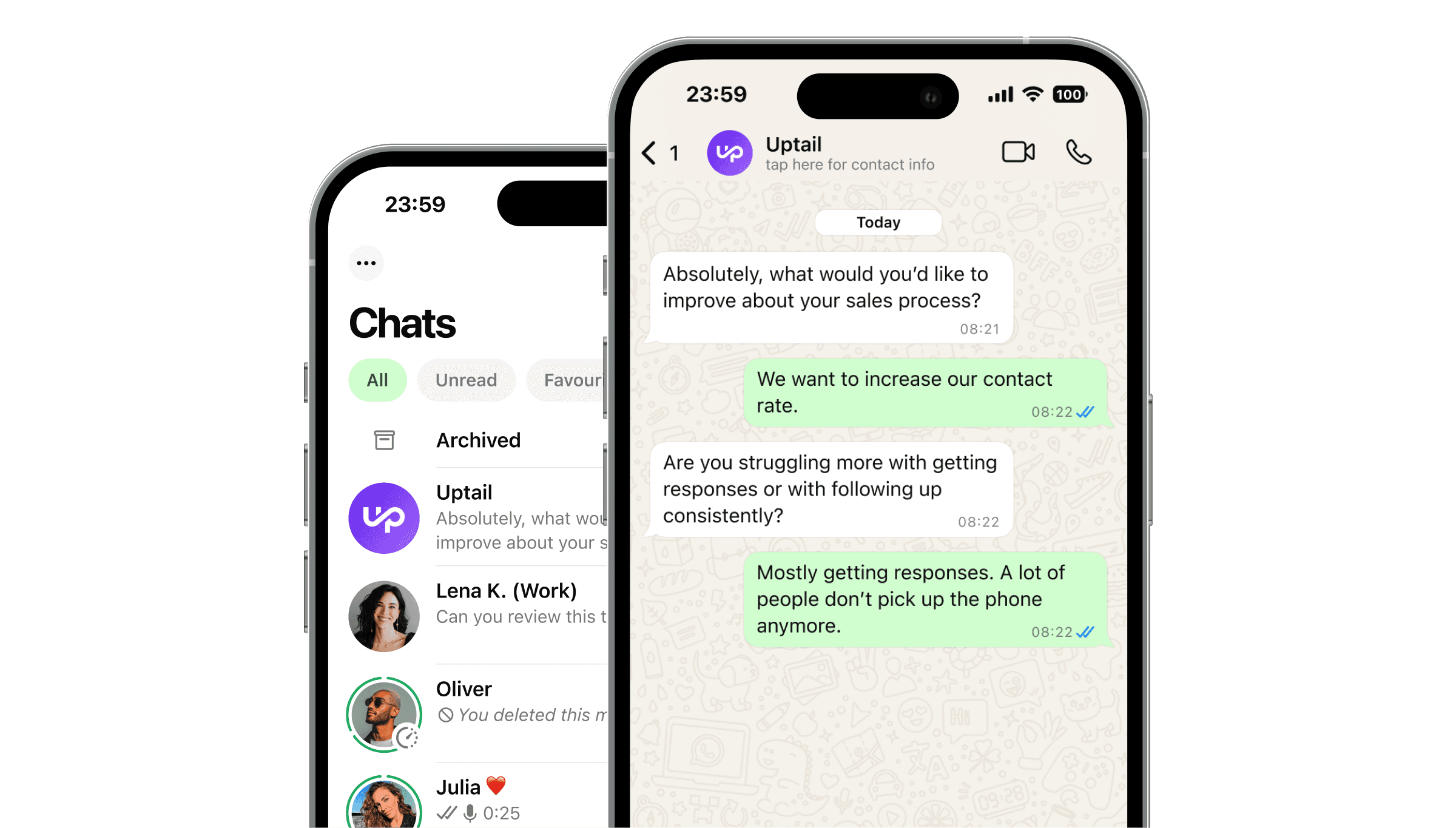
Conversational marketing replaces that sequence with a real-time, two-way dialogue, meeting buyers where they already are and qualifying them in the same conversation.
Quick Answer
Conversational marketing is a strategy that uses real-time, one-to-one messaging, through channels like WhatsApp, live chat, and social DMs , to engage, qualify, and convert leads inside a conversation rather than routing them through forms, email sequences, and sales callbacks. The goal is to shorten the path from first contact to qualified meeting.
3B+ people use WhatsApp monthly (confirmed by Meta, 2025), making messaging apps the default communication layer for consumers and the natural home for conversational marketing.
How It Differs from Traditional Marketing
Traditional Funnel | Conversational Marketing | |
|---|---|---|
Entry point | Landing page + form | Direct message on WhatsApp, chat, or DM |
Qualification | Manual (SDR calls back) | Automated in the conversation |
Response time | Hours to days | Seconds |
Data capture | Form fields (static) | Conversation context (dynamic) |
Channel | Email, phone | Messaging apps the buyer already uses |
The shift isn't about replacing your entire funnel, it's about removing the friction points where leads drop off.
A form-to-callback process can take 24–48 hours. A conversational flow qualifies the same lead in under two minutes and books a meeting before they leave the chat.
Where Conversational Marketing Happens
The largest messaging platform globally. Ideal for markets where WhatsApp is the default communication channel, particularly Latin America, Europe, and Southeast Asia.
Website Live Chat
Chatbots and live agents embedded on your site. Useful for capturing visitors who are already researching your product but haven't committed to a form fill.
Instagram & Messenger
Direct messages triggered by ad clicks, story replies, or comment keywords. Strong for direct to customer (DTC) and e-commerce brands running social campaigns.
SMS
Text-based flows for markets where SMS open rates are high. Works well for appointment reminders, transactional updates, and short qualification sequences.
How to Build a Conversational Marketing Strategy
Pick your highest-friction entry point
Identify where leads currently drop off, the form nobody completes, the callback nobody answers. That's your first conversational channel.
Choose the right messaging channel
Match the channel to where your buyers already spend time. For B2B in LATAM or Europe, WhatsApp is usually the answer. For direct to customer (DTC) in the US, Instagram DMs or SMS may perform better.
Design a qualification flow
Map 3–5 questions that mirror what your sales team asks on a discovery call. Keep it conversational, not a rigid survey. The goal is to score intent and route the lead appropriately.
Automate the handoff
High-intent leads get passed to a human rep instantly, with full context. Lower-intent leads enter a nurture sequence, still inside the messaging channel, not a cold email drip.
Connect to your CRM
Every conversation, lead score, and qualification answer should sync to your pipeline automatically. Without this, conversational marketing creates an engagement island disconnected from your sales data.
Common Mistakes
Treating it as live chat: Conversational marketing is not about having reps available 24/7. Automation handles the first 80% of the conversation; humans step in only when needed.
Asking too many questions: More than 5 qualification questions and completion rates drop significantly. Prioritise the 3–4 data points your sales team actually needs.
Ignoring CRM sync: If conversation data doesn't flow into your pipeline, you've created a new silo. Integration is not optional.
Using the wrong channel: Deploying a website chatbot when your buyers live on WhatsApp (or vice versa) kills adoption before it starts.
Conversational marketing works because it meets buyers in a channel they already trust, gives them answers in seconds instead of days, and captures richer qualification data than any form ever could.
The businesses seeing the best results are the ones that automate the repetitive parts and keep the human interaction for the moments that actually matter.