Carlos Delgado
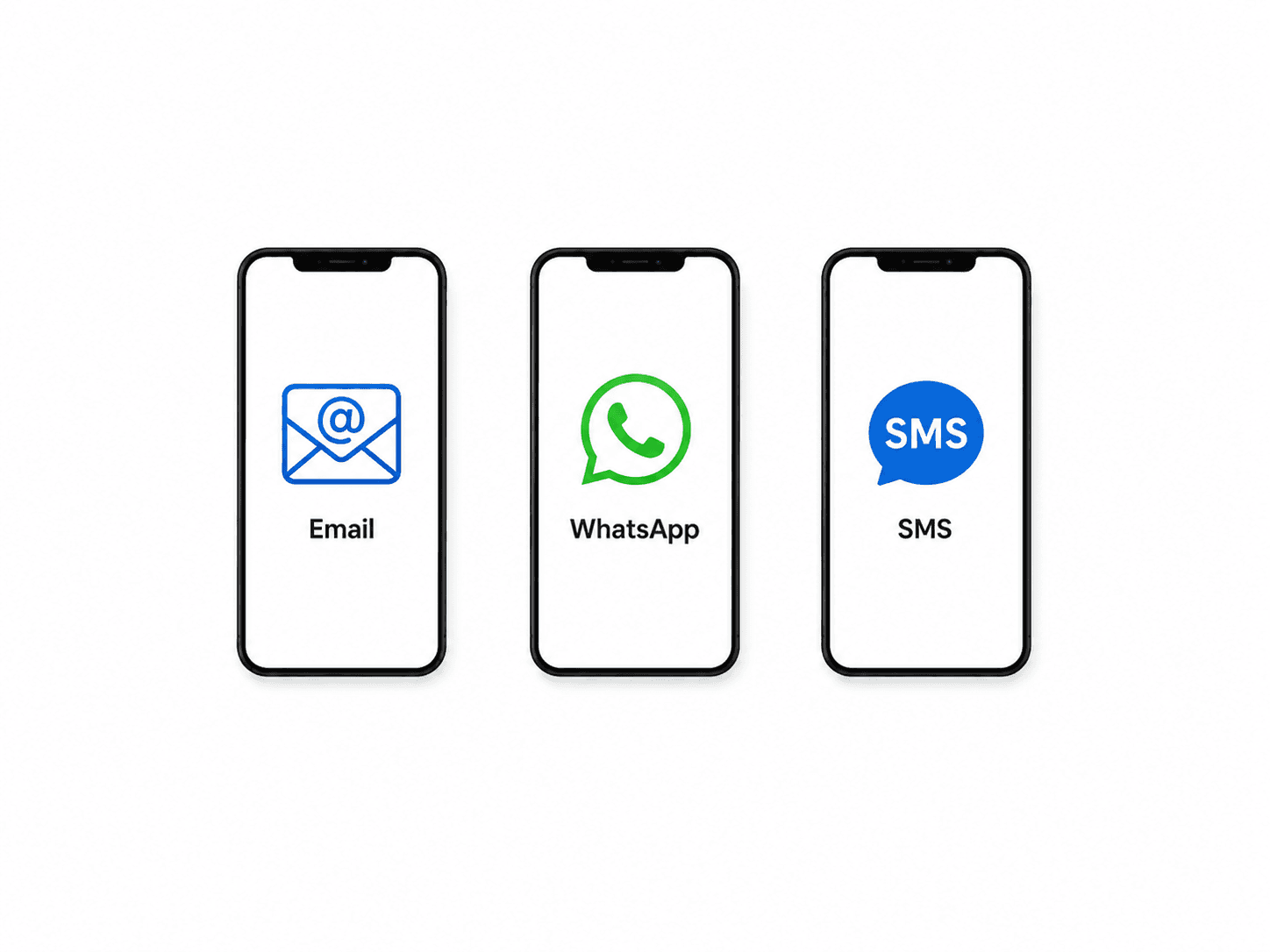
WhatsApp open rates sit at 98% within the first hour. Email open rates hover around 20-25%, if the message survives the spam filter. SMS lands somewhere in between but is largely a one-way broadcast. These are not marginal differences. They are structural ones that change how B2C sales should be built in 2026.
The channel a business uses for first contact determines whether a lead converts or disappears. Most sales teams are still optimising the wrong channel.
Quick Answer
WhatsApp outperforms SMS and email on every active-conversion metric in 2026: ~98% open rates within an hour, 30-40%+ reply rates, and conversion rates that are 3-5x higher than email for B2C high-intent leads. SMS remains useful for transactional alerts; email for long-cycle nurture. For lead conversion on inbound B2C traffic, WhatsApp is the primary channel.
WhatsApp vs SMS vs Email: 2026 Benchmark Comparison
The numbers below reflect B2C sales and marketing performance data across education, healthcare and real estate in 2026. These are benchmarks, not guarantees. Performance varies by industry, message quality, and timing.
Metric | SMS | ||
|---|---|---|---|
Open rate | ~98% (within 1 hour) | ~95% (within 3 hours) | 20-25% |
Reply rate | 30-40%+ | 5-15% | 1-3% |
Conversion rate (B2C inbound) | 15-50% (with AI) | 3-8% | 1-4% |
Avg. response speed | Seconds (with AI) | Minutes (read-only) | Hours to days |
Two-way capability | Native, rich | Limited, mostly one-way | Possible but poor UX |
Cost per message | €0.03-0.08 | €0.04-0.10 | €0.001-0.01 |
Personalisation ceiling | High (conversational AI) | Low (merge fields) | Medium (segmentation) |
Email wins on cost per message but loses on every metric that matters for conversion. SMS wins on delivery speed but loses on engagement depth. WhatsApp wins where it counts: two-way conversation with a live human or an AI agent acting on their behalf.
Step-by-Step: How to Match Channel to Use Case
Identify the lead's intent signal: A form fill on a high-ticket product page (real estate, education, automotive) signals high intent. That lead should go to WhatsApp immediately. A newsletter subscriber signals low intent. That goes to email.
Map the action you want the lead to take: If the goal is booking a call, scheduling a demo, or purchasing within 48 hours, use WhatsApp. If the goal is brand awareness or drip education over weeks, use email. If the goal is a transactional reminder (appointment confirmation, order update), use SMS.
Assign response ownership: WhatsApp requires a response within seconds or the lead cools. This means either a human always on-call or an AI agent covering the channel 24/7.
Set the handoff rules: WhatsApp AI handles qualification and booking. Once a lead is qualified, it routes to a human sales rep for closing. Email handles the post-conversation nurture trail. SMS handles the confirmation and reminder layer.
Measure the right metric per channel: Email: track open rate and click-to-landing rate. SMS: track delivery and reminder completion rate. WhatsApp: track reply rate, qualification rate, and booking rate. Conflating these produces misleading dashboards.
Test message timing by channel: WhatsApp messages sent within 60 seconds of a form submission convert 3-5x higher than messages sent 5 minutes later. Email timing is far less sensitive. SMS performs best for reminders sent 24 hours and 2 hours before an appointment.
3 Industries Where the Channel Choice Changes the Business
Education and Bootcamps
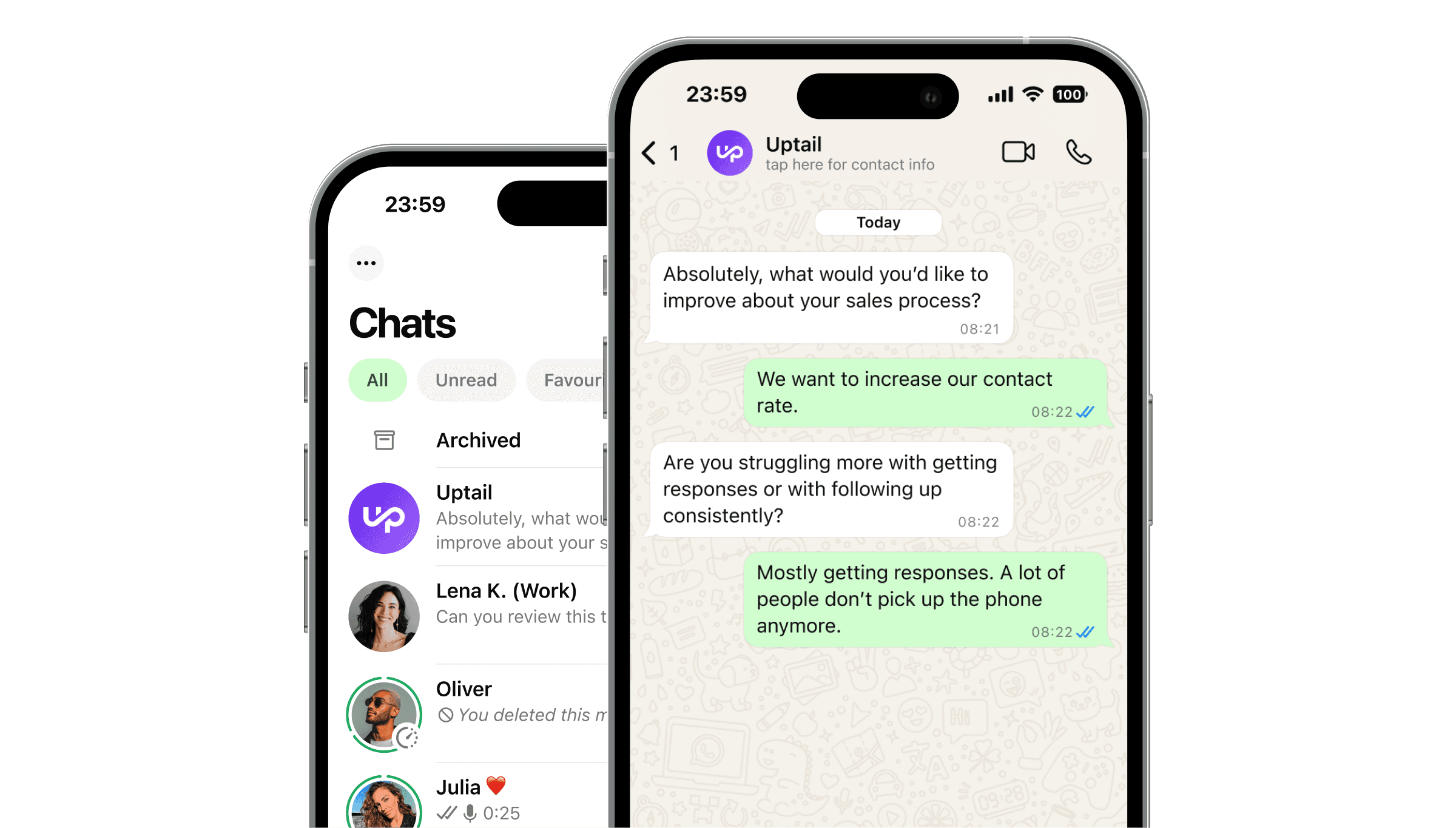
Prospects browsing a coding bootcamp at 10pm are not going to email back by 9am. The use case is textbook: high-intent prospect fills in a form, needs to speak to an enrolment advisor, but that advisor is asleep. An AI agent on WhatsApp answers in seconds, qualifies the lead (budget, timeline, prior experience), and books the advisor call. The human advisor wakes up to a calendar full of qualified appointments.
Email would have caught that prospect the next afternoon, after they had already spoken to a competitor.
Real Estate
Real estate leads are notoriously time-sensitive. A prospect viewing a listing at 7pm on Saturday will not wait until Monday for an agent to respond. The industry average response time in most EU markets is 4+ hours. That is enough time for a competitor to book the viewing.
WhatsApp AI agents qualify the lead (location preference, budget, timeline, rental vs. purchase), book the viewing, and sync to the agent's CRM before the agent's Monday morning coffee. SMS cannot carry that conversation. Email cannot close that loop in real time.
Healthcare and Aesthetics
Healthcare bookings involve personal questions that prospects are uncomfortable asking over email. WhatsApp's private, conversational format matches the behaviour of someone asking about a procedure or treatment. Elha's result, +6.7% bookings and -58% cost per booking, came specifically because the AI could handle sensitive qualification questions in a conversational format at any hour. A broadcast SMS cannot do that. An email thread cannot do that.
Mistakes That Quietly Kill Channel Performance
Using WhatsApp as a broadcast channel: Sending promotional blasts to opted-in contacts without conversation logic kills reply rates and risks account suspension. WhatsApp is a dialogue medium, not a newsletter platform.
Measuring email by open rate in 2026: Apple Mail Privacy Protection has made open rates unreliable since 2021. Click rate and reply rate are the metrics that matter for email engagement now.
Treating SMS as a conversion channel: SMS is transactional infrastructure, not a sales channel. Trying to close a high-ticket lead over SMS is friction the prospect did not sign up for.
Ignoring after-hours lead volume: Most B2C companies receive 30-40% of their inbound leads outside business hours. Routing those leads to an email queue or an offline agent means losing a third of the pipeline before anyone shows up to work.
Skipping CRM sync on WhatsApp conversations: Conversations that do not feed into Salesforce, HubSpot, or Zoho create a parallel data silo. Every WhatsApp qualification exchange should write back to the contact record automatically.
The channel choice is not a marketing decision. It is a revenue architecture decision. In 2026, companies still treating WhatsApp as an optional add-on are leaving their fastest-responding, highest-converting channel idle while their leads expire in an email inbox.
Customers expect a conversation, not a broadcast.